| unit_microorganisms_-_monera_kingdom.pptx |
| monera_protista_and_fungi__kingdom.pptx |
MONERA KINGDOM: Prokaryotic and unicellular. Auto and heterotrophs.
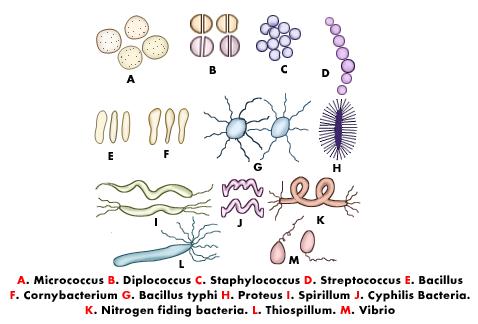
Shapes: coccus, bacillus, spirillum. Asexual reproduction by binary fision.
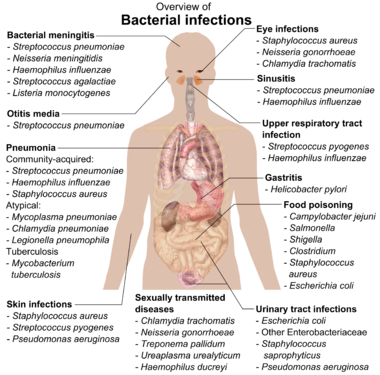
Helicobacter pilorii:
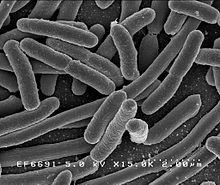
Some bacteria produce infections and some other types are able to produce good substances, like yogourt and cheese, or like vitamins in our intestines.
Ways of life: Saprophytes (decomposers), parasites and symbionts.
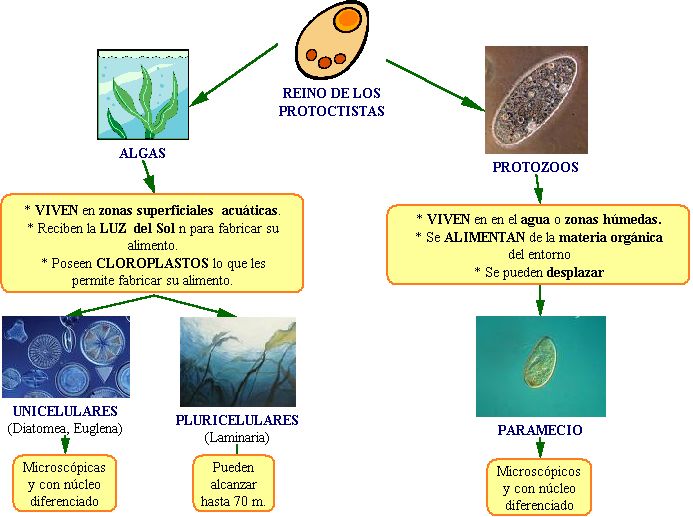
PROTOCTISTA KINGDOM: Eukaryotic and unicellular. Some of them form colonies. No tissues. Two groups: Protozoa and Algae. Heteroytrophs and Autotrophs. Asexual reproduction (binary fision).
Protozoa are classified according to the way of movement: cillia, flagellum, or pseudopods. Cilliata, Flagellata, Ameboids and Sporozoan.
Algae: autotrophs. Unicellular: Chlorella and Multicellular: brown algae.
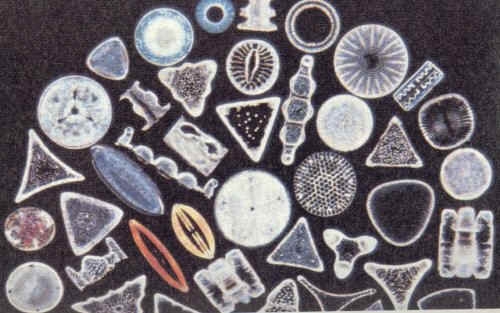
Unicellular algae.

| observing_bacteria_in_yogurt.doc |
| microorganisms.doc |
FUNGI KINGDOM: Eukaryotic, uni and multicellular. Heterotrophs (saprophytes, symbionts, parasites). Asexual reproduction (budding and spores). Multicellular fungi are made up of threads called hyphae (moulds). When hyphae are packed together, they form the mycellium (mushrooms).
They live in the soil in dark, damp places.
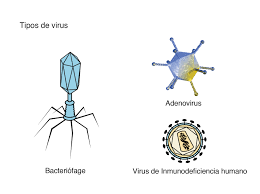
VIRUSES:
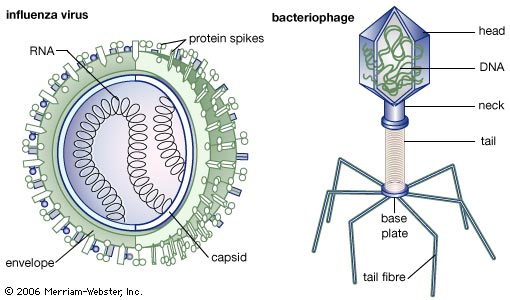
A virus is not alive. It's formed by a capsule made up of proteins and a nucleic acid in it (DNA or RNA). But it is able to get attached to a cell, infect it and force the cell to produce copies of the virus that will go to another cell. Our white cells in the blood are the ones that defend us from viruses. When someone is ill due to a virus, antibiotics are not useful.
VIRUSES infect cells by injecting its DNA or RNA in the cell. This foreign nucleic acid forces the cell to stop doing what the cell has to do and to copy the virus' DNA many times. Once the cell has copied the capsule and the DNA of the virus, the copies of viruses get assembled and go out of the cell. Sometimes the cell dies when the viruses get out of it. Now, there are many viruses ready to infect other cells.
The process of copy can be not completely accurate, that means there are mistakes in the copies. The mistakes usually lead to different variations of the virus, that is a "new type" (variante en español).
ANTIBIOTICS: Find information about them. Are they good for us?

| bacteria_reading.pdf |
El País, the newspaper, has been doing a great wrok explaining all the scientists know about the COVID 19. Find here a link to read one of the articles they have written in 2 years of pandemics. Feel free to navigate in EL PAIS navigator looking for other articles.